Web App vs Mobile App: Which Is Right for Your Business in 2026?

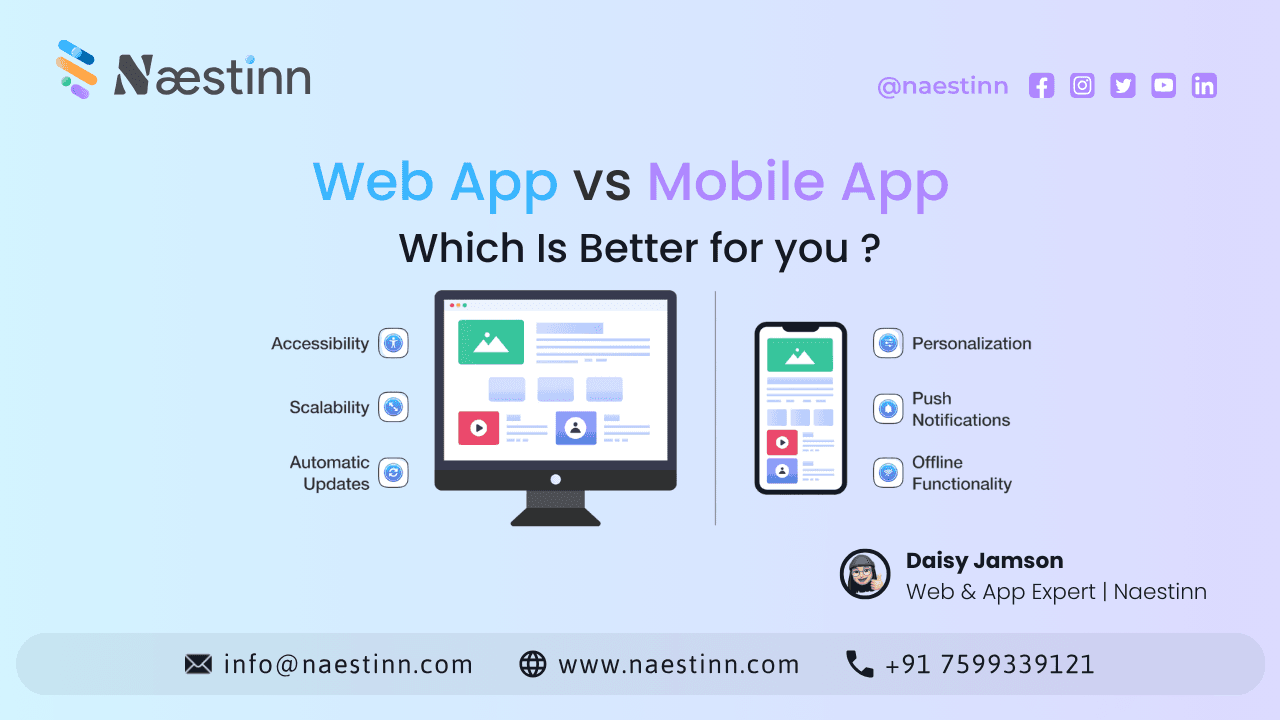
When businesses decide to go digital, one of the biggest questions they face is: Should we build a web app or a mobile app?
The answer isn’t about trends. It’s about your business model, audience behavior, budget, and long-term goals. In this guide, we’ll break down the differences, benefits, costs, and use cases to help you make the right decision.
What Is a Web App?
A web application is software accessed through a browser (Chrome, Safari, Edge, etc.). Users don’t need to download anything — they simply visit a URL.
Examples:
- Gmail
- Zoho CRM (browser version)
- Online banking portals
- SaaS dashboards
Key Features of Web Apps:
- Works on all devices (desktop, tablet, mobile)
- No installation required
- Easy updates (server-side)
- Lower development cost compared to mobile apps
What Is a Mobile App?
A mobile application is built specifically for smartphones and downloaded from app stores (Google Play, Apple App Store).
Examples:
- Swiggy
- Banking apps
Key Features of Mobile Apps:
- Installed on device
- Faster performance
- Push notifications
- Access to device features (camera, GPS, fingerprint, etc.)
- Better user engagement
Web App vs Mobile App: Detailed Comparison
| Feature | Web App | Mobile App |
|---|---|---|
| Access | Browser-based | App Store download |
| Installation | Not required | Required |
| Development Cost | Lower | Higher |
| Maintenance | Easier updates | Store updates required |
| Performance | Moderate | High |
| Push Notifications | Limited | Yes |
| Offline Access | Limited | Yes |
| User Engagement | Medium | High |
| Time to Market | Faster | Slower |
When Should You Choose a Web App?
A web app is ideal if you’re a startup validating an idea, want faster development, users mainly use desktop/laptop, you need a SaaS platform, budget is limited, or you want cross-platform accessibility.
Example Use Cases:
- CRM systems
- ERP dashboards
- Booking portals
- Online learning platforms
- Admin panels
For many B2B businesses, a web app is often the smarter first step.
When Should You Choose a Mobile App?
A mobile app is ideal if your audience is mobile-first, you need push notifications, you rely on real-time engagement, you want higher customer retention, or you need device features (GPS, camera, etc.).
Example Use Cases:
- Ecommerce apps
- Food delivery apps
- Fitness apps
- Social networking apps
- Loyalty & rewards apps
If your business depends on frequent user interaction, mobile apps offer stronger engagement.
What About Cost Differences?
Generally, Web App Development has a lower cost, while Mobile App Development has a higher cost (especially if building for both Android & iOS). Mobile apps require platform-specific development, app store compliance, ongoing updates, and device optimization.
Web apps are easier to scale and maintain in early stages.
Can You Build Both?
Yes — and many growing businesses eventually do.
A common strategy is:
1️⃣ Start with a web app (validate + scale operations)
2️⃣ Launch mobile app once user base grows
This approach reduces risk and controls budget.
How Naestinn Helps You Decide the Right Approach
At Naestinn, we don't just build apps — we analyze your business model first. We help businesses identify whether web or mobile is the right starting point, build scalable architecture, develop secure and high-performance applications, integrate APIs, and plan long-term digital growth.
Final Verdict: Web App or Mobile App?
Choose a Web App If:
- Faster launch is required
- Budget control is strict
- Focus is B2B operations
Choose a Mobile App If:
- User engagement is key
- Customer retention is critical
- Focus is direct consumer interaction
Or build strategically — starting with one and scaling to both.
Frequently Asked Questions
Table of Contents
Top Stories




Turn your vision into
scalable reality.
Stop guessing with AI-generated scopes. Get reliable architecture, expert engineering, and a product that scales.