
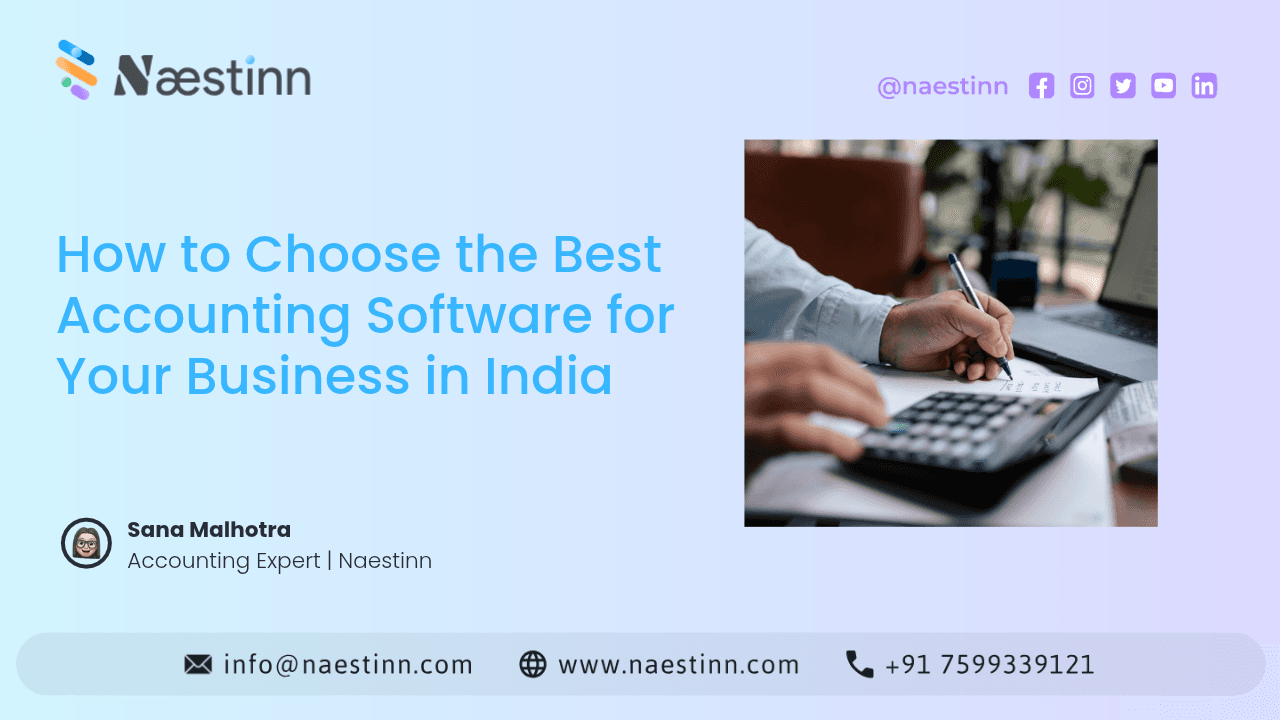
Choosing accounting software is not simply about finding the cheapest or most popular option. The right software should match your business size, accounting processes, GST requirements, integrations, automation needs, and future growth.
We believe businesses should first understand their requirements and then compare suitable software before making a decision.
Not sure which accounting software to consider? We have already covered some of the leading options in our detailed guide: 10 Best Accounting Software for Indian Businesses in 2027. We recommend checking that comparison first to understand the different solutions available and then using the factors below to identify which one fits your business.
What Should You Look for in Accounting Software?
Once you have shortlisted a few options, consider the following factors before making your final decision.
1. Business Size and Requirements
A small retailer may need basic billing, GST invoices, and expense tracking, while a growing company may require inventory, automation, multiple users, detailed reports, and integrations.
Start by identifying what your business needs today and as it grows.
2. GST and Tax Compliance
For Indian businesses, GST functionality is an important consideration. Check whether the software supports the GST workflows relevant to your business, including invoicing, reporting, and e-invoicing where applicable.
3. Invoicing and Payments
Look for software that makes it easy to create invoices, track payments, manage receivables, and follow up on outstanding amounts.
4. Integrations
As your business grows, you may need your accounting system to connect with CRM, inventory, payment, expense, or other business applications.
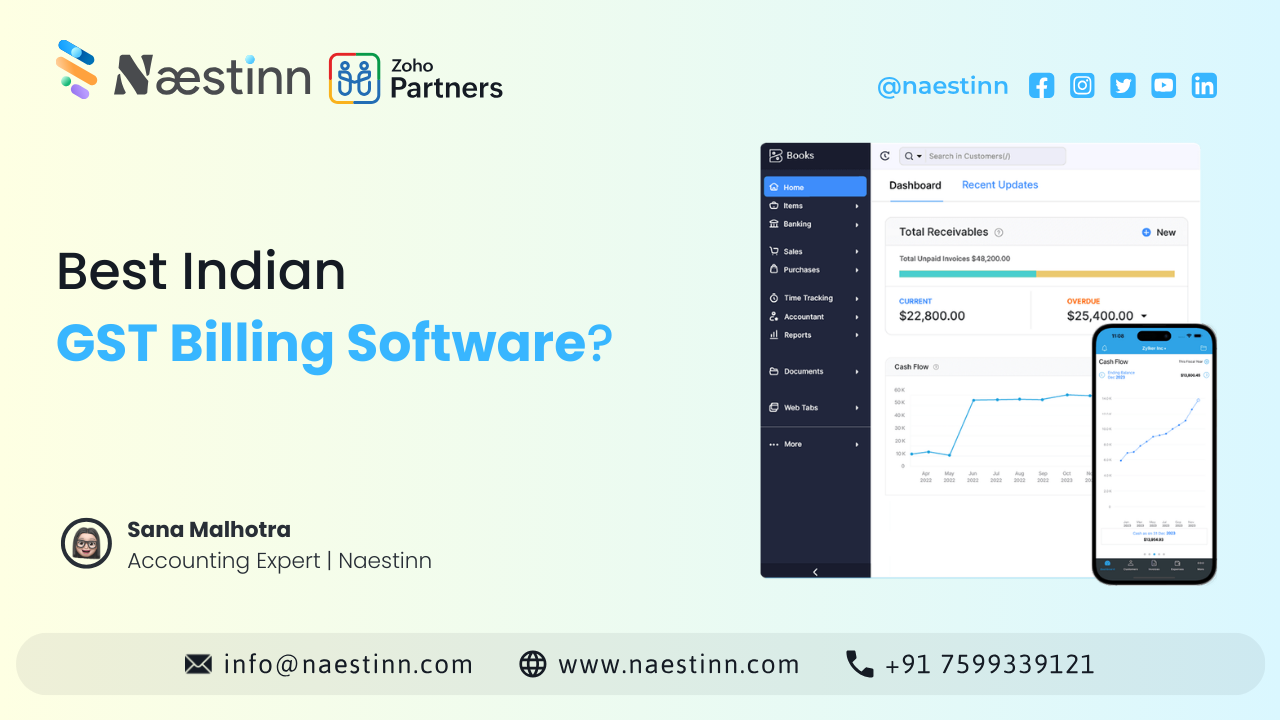
For example, businesses already using the Zoho ecosystem may consider Zoho Books because it can connect with other Zoho applications.
5. Automation
Ask yourself how much repetitive work the software can reduce.
Features such as recurring invoices, payment reminders, bank reconciliation, workflows, and automated reports can help reduce manual tasks.
6. Reporting
Good accounting software should help you understand your business finances, not just record transactions.
Look for reports covering income, expenses, receivables, payables, cash flow, taxes, and profitability.
7. Pricing and Scalability
Don't compare software only on its starting price. Consider the number of users, available features, integrations, upgrade costs, and whether the platform can continue supporting your business as it grows.
How Naestinn Can Help
At Naestinn, we help businesses evaluate their requirements and implement suitable accounting solutions.
Our approach is simple:
Understand your requirements → Compare suitable solutions → Implement → Integrate → Automate
For businesses considering Zoho Books, we can also help with Zoho implementation, Zoho customization, Zoho integrations, and ongoing support.
Conclusion
The best accounting software isn't necessarily the most popular one. It is the one that fits your business processes, budget, team, and future requirements.
Before choosing, we recommend reading our 10 Best Accounting Software for Indian Businesses in 2027 guide and comparing the options based on your specific needs.
What accounting software does your business use?
Share your experience with us—which software do you use and what feature matters most to your business?
Frequently Asked Questions
How do I choose the right accounting software for my business?
What features should I look for in accounting software?
Which accounting software is best for small businesses?
Why is GST support important in accounting software?
Should I choose accounting software based on price?
Table of Contents
Top Stories


Turn your vision into
scalable reality.
Stop guessing with AI-generated scopes. Get reliable architecture, expert engineering, and a product that scales.