10 Best Accounting Software for Small Businesses in the USA (2027)
Choosing accounting software can help small businesses reduce manual bookkeeping, organize finances, manage invoices, and get better visibility into their business performance. However, the right software depends on the business's size, accounting needs, budget, integrations, and future growth.
At Naestinn, we believe businesses should compare software based on their actual requirements rather than choosing a platform simply because it is popular. In this guide, we have reviewed 10 accounting software options for small businesses in the USA and highlighted where each may fit.
What Makes Good Accounting Software for a Small Business?
Before choosing a platform, consider:
-
Invoicing and payment tracking
-
Expense management
-
Bank reconciliation
-
Financial reporting
-
Tax and compliance support
-
Payroll requirements
-
Inventory management
-
Integrations
-
Number of users
-
Pricing and scalability
1. QuickBooks Online
Best for: Small businesses looking for comprehensive cloud accounting.
QuickBooks Online offers accounting, invoicing, expense tracking, reporting, and integrations with other business tools. Its range of features makes it suitable for businesses that expect their accounting requirements to grow.
Our view: A practical option for small businesses looking for an established accounting platform with broad functionality.
2. Xero
Best for: Small businesses that need cloud accounting and collaboration.
Xero provides accounting, invoicing, expense management, bank reconciliation, reporting, and integrations.
Our view: Worth considering for businesses that want cloud-based accounting and collaboration with their accountant or bookkeeper.
3. FreshBooks
Best for: Freelancers, consultants, and service-based businesses.
FreshBooks focuses on invoicing, expenses, time tracking, payments, and accounting.
Our view: Particularly relevant when invoicing clients and tracking billable work are major parts of the business.
4. Wave
Best for: Small businesses looking for basic accounting and invoicing.
Wave provides accounting, invoicing, and receipt-related features designed around small-business needs.
Our view: Suitable for businesses with relatively straightforward financial management requirements.
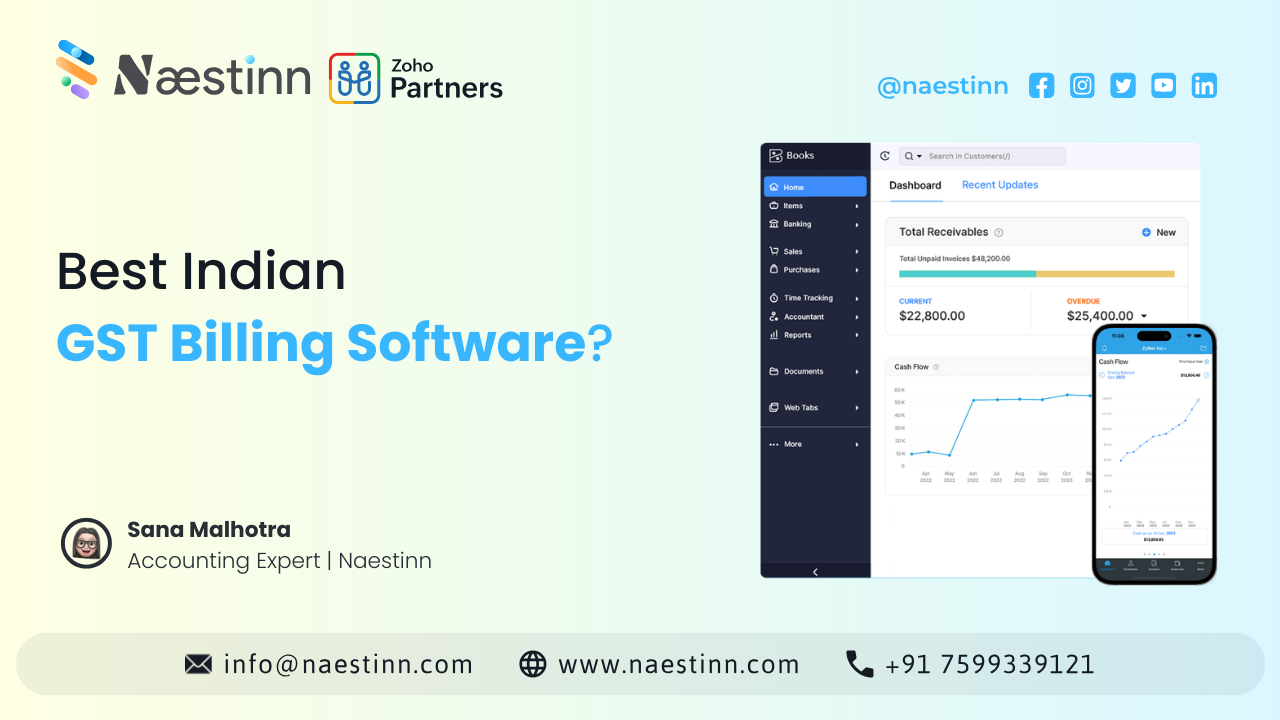
5. Zoho Books
Best for: Small businesses looking for accounting with broader business integrations.
Zoho Books provides accounting, invoicing, expenses, inventory, banking, reporting, and automation features. It can also connect with other Zoho applications.
Our view: Businesses already using or planning to use the Zoho ecosystem may find this particularly useful for creating connected business workflows.
6. Sage Accounting
Best for: Small businesses looking for cloud accounting and financial management.
Sage provides accounting features such as invoicing, expense management, reporting, and financial tracking.
7. AccountEdge
Best for: Small businesses looking for desktop-oriented accounting.
AccountEdge provides accounting and financial management features with an emphasis on traditional desktop accounting workflows.
8. Odoo Accounting
Best for: Businesses looking for accounting as part of a broader business management platform.
Odoo combines accounting with other business applications, allowing businesses to connect financial management with areas such as CRM, inventory, sales, and operations.
9. Patriot Accounting
Best for: Small US businesses looking for straightforward accounting and payroll-related solutions.
Patriot offers accounting and payroll products designed specifically around small-business requirements in the US.
10. Kashoo
Best for: Small businesses looking for straightforward online accounting.
Kashoo focuses on core accounting functionality for small businesses, including income, expenses, invoicing, and financial organization.
How Should a Small Business Choose Accounting Software?
There isn't one accounting platform that works for every business.
A freelancer may prioritize invoicing and expense tracking, while an e-commerce business may need inventory and payment integrations. A growing company may prioritize automation, reporting, multiple users, and scalability.
Before choosing, compare the software based on:
Business needs → Features → Integrations → Ease of use → Pricing → Scalability
How Naestinn Can Help
At Naestinn, we help businesses understand their requirements and implement suitable business software.
For businesses considering Zoho Books, our services can include Zoho implementation, Zoho customization, Zoho integrations, workflow automation, and ongoing support.
Conclusion
Accounting software can become an important part of a small business's financial operations. The right choice depends on what you need now and where your business is heading.
Before making a decision, compare features, pricing, integrations, usability, and scalability rather than selecting software based only on its popularity.
What accounting software do you use for your small business?
Have you used QuickBooks, Xero, Zoho Books, FreshBooks, or another platform? Share your experience and tell us which feature you consider most important.
Frequently Asked Questions
What is the best accounting software for small businesses in the USA?
What should small businesses look for in accounting software?
Is QuickBooks Online good for small businesses?
Is Xero suitable for small businesses?
Table of Contents
Top Stories
Turn your vision into
scalable reality.
Stop guessing with AI-generated scopes. Get reliable architecture, expert engineering, and a product that scales.