How Much Does Generative AI Development Cost in 2026?

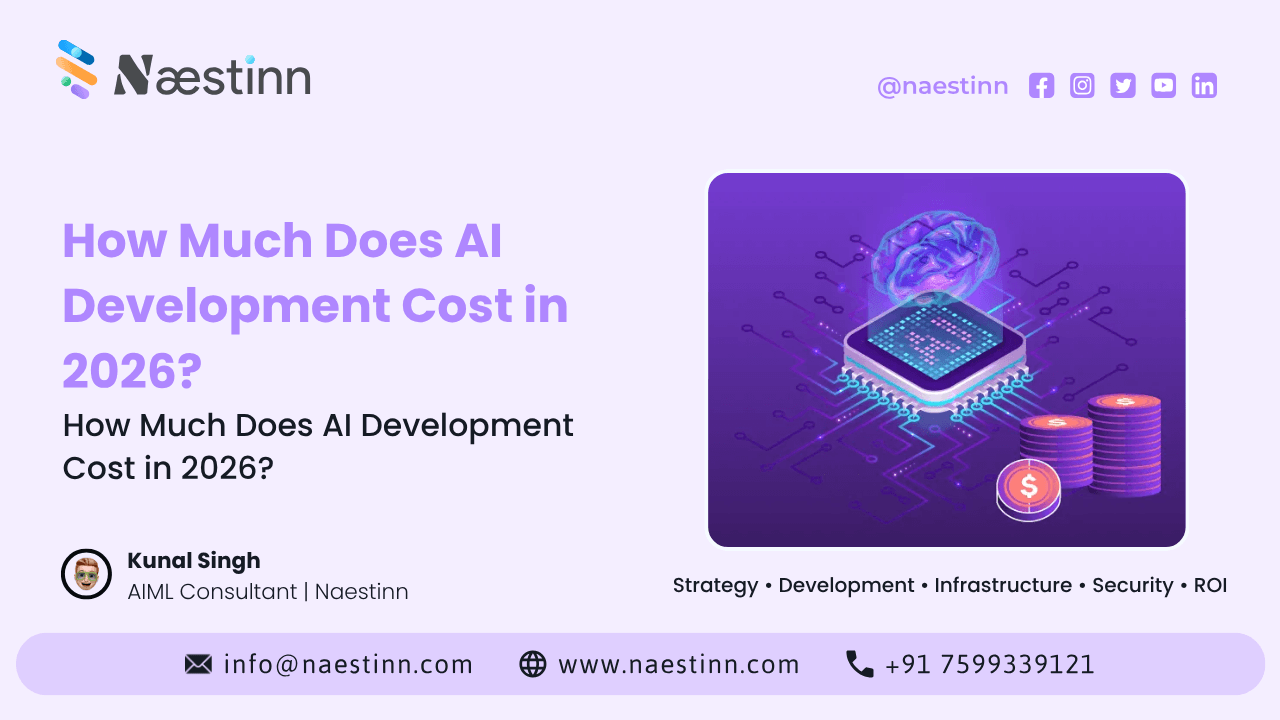
Generative AI has moved far beyond experimentation
In 2026, businesses across healthcare, finance, SaaS, retail, manufacturing, and professional services are investing heavily in AI-powered applications to automate workflows, improve customer experiences, and drive operational efficiency.
As adoption accelerates, one question continues to dominate executive discussions:
"How much does generative AI development actually cost?"
The answer depends on multiple factors, including project complexity, infrastructure requirements, integration needs, security considerations, and long-term scalability goals.
While there is no universal price tag, understanding the key cost drivers can help organizations plan budgets more effectively and avoid costly surprises.
Why Generative AI Development Costs Vary So Much
A simple AI-powered chatbot and an enterprise-grade AI platform are fundamentally different projects.
Development costs vary based on:
-
Business objectives
-
Data complexity
-
AI model requirements
-
Number of integrations
-
User volume
-
Compliance requirements
-
Deployment architecture
This is why two AI projects can differ significantly in cost despite appearing similar on the surface.
Generative AI Development Cost by Project Type
AI-Powered Chatbots & Virtual Assistants
Common Use Cases:
-
Customer support
-
Lead generation
-
Internal knowledge assistants
-
HR automation
Estimated Cost Range:
$10,000 – $50,000+
Cost Factors:
-
Conversation complexity
-
Knowledge base integration
-
Multi-language support
-
CRM connectivity
AI Content Generation Platforms
Common Use Cases:
-
Marketing content
-
Product descriptions
-
Social media content
-
Documentation generation
Estimated Cost Range:
$20,000 – $100,000+
Cost Factors:
-
Workflow automation
-
Content review systems
-
Custom prompts
-
Multi-user collaboration
Enterprise AI Applications
Common Use Cases:
-
Internal business automation
-
Knowledge management
-
Decision support systems
-
Workflow orchestration
Estimated Cost Range:
$50,000 – $300,000+
Cost Factors:
-
Enterprise integrations
-
Security architecture
-
User management
-
Scalability requirements
Custom Generative AI Products
Common Use Cases:
-
SaaS products
-
AI startups
-
Industry-specific platforms
-
Customer-facing AI applications
Estimated Cost Range:
$100,000 – $500,000+
Cost Factors:
-
Product architecture
-
Advanced AI workflows
-
Custom user experiences
-
Long-term maintenance
Key Factors That Influence Generative AI Development Costs
1. AI Model Selection
Businesses can choose between:
-
Commercial AI models
-
Open-source AI models
-
Fine-tuned custom models
Each option impacts:
-
Development complexity
-
Licensing costs
-
Infrastructure expenses
-
Maintenance requirements
The right choice depends on business objectives and data sensitivity.
2. Data Preparation and Management
AI systems depend on quality data.
Organizations often underestimate the effort required for:
-
Data collection
-
Cleaning
-
Labeling
-
Validation
-
Governance
In many projects, data preparation represents a significant portion of the overall investment.
3. Integration Requirements
Most AI applications must connect with existing systems such as:
-
CRM platforms
-
ERP systems
-
Marketing tools
-
Databases
-
Customer support software
The more integrations required, the greater the development effort.
4. Security and Compliance
As AI handles sensitive information, security becomes a major investment area.
Businesses may require:
-
Data encryption
-
Access controls
-
Audit logging
-
Compliance monitoring
-
Industry-specific regulatory support
Security should never be treated as an optional expense.
5. Infrastructure and Cloud Costs
Development is only part of the investment.
Organizations must also budget for:
-
Cloud hosting
-
AI model inference
-
Storage
-
Monitoring
-
Scaling resources
Operational costs continue throughout the application's lifecycle.
Hidden Costs Businesses Often Overlook
Many organizations focus solely on development expenses.
However, successful AI initiatives also require investment in:
-
Maintenance
AI systems require ongoing updates and optimization.
-
Monitoring
Performance, accuracy, and cost monitoring are essential.
-
Model Improvements
Business requirements evolve over time.
-
User Training
Teams must learn how to effectively use AI systems.
-
Governance
Policies and oversight become increasingly important as AI adoption grows.
Ignoring these areas can significantly impact ROI.
Build vs Buy: Which Is More Cost Effective?
Many businesses compare custom development with off-the-shelf AI tools.
Buying AI Solutions
Pros:
-
Faster deployment
-
Lower initial costs
-
Minimal development effort
Cons:
-
Limited customization
-
Scalability constraints
-
Vendor dependence
Building Custom AI Solutions
Pros:
-
Greater flexibility
-
Competitive differentiation
-
Better integrations
-
Long-term scalability
Cons:
-
Higher initial investment
-
Longer implementation timelines
The best approach depends on business goals, growth plans, and operational requirements.
How to Maximize AI ROI in 2026
Rather than focusing solely on development costs, organizations should evaluate:
-
Revenue opportunities
-
Cost savings
-
Productivity improvements
-
Customer satisfaction
-
Competitive advantage
The most successful businesses view AI as a strategic investment rather than a technology expense.
When implemented effectively, generative AI can create returns that significantly outweigh initial development costs.
Why Businesses Are Investing More in Generative AI
Organizations are increasingly allocating larger budgets to AI because it helps them:
✔ Automate repetitive tasks
✔ Improve decision-making
✔ Enhance customer experiences
✔ Reduce operational costs
✔ Accelerate innovation
✔ Create new revenue streams
As AI capabilities continue to evolve, businesses that invest strategically today are positioning themselves for future growth.
How Naestinn Helps Businesses Build Cost-Effective Generative AI Solutions
At Naestinn, we help organizations design, develop, and scale generative AI applications that align with business objectives and budget requirements.
Our expertise includes:
-
Generative AI Development
-
AI Strategy & Consulting
-
AI Application Development
-
MLOps & AI Operations
-
Enterprise AI Solutions
-
AI Security & Governance
-
Cloud Infrastructure Optimization
-
AI Integration Services
Whether you're exploring your first AI initiative or scaling enterprise-wide adoption, our team helps ensure every investment delivers measurable value.
Conclusion
Generative AI development costs in 2026 vary widely based on project scope, complexity, infrastructure requirements, and business objectives. While smaller AI applications may require a modest investment, enterprise-grade solutions often demand a larger budget to ensure scalability, security, and long-term performance.
The key is not finding the cheapest AI solution—it's finding the right solution that delivers sustainable business value. Organizations that focus on strategy, user needs, and ROI rather than development costs alone are more likely to achieve successful outcomes.
As generative AI becomes a core business capability, investing in the right architecture, expertise, and implementation partner can make the difference between an AI experiment and a competitive advantage.
Frequently Asked Questions
How much does generative AI development cost in 2026?
Why do generative AI development costs vary so widely?
What are the biggest cost drivers in AI development?
Are there hidden costs in generative AI projects?
Table of Contents
Top Stories



Turn your vision into
scalable reality.
Stop guessing with AI-generated scopes. Get reliable architecture, expert engineering, and a product that scales.