How to Choose the Right Software Development Company In USA.

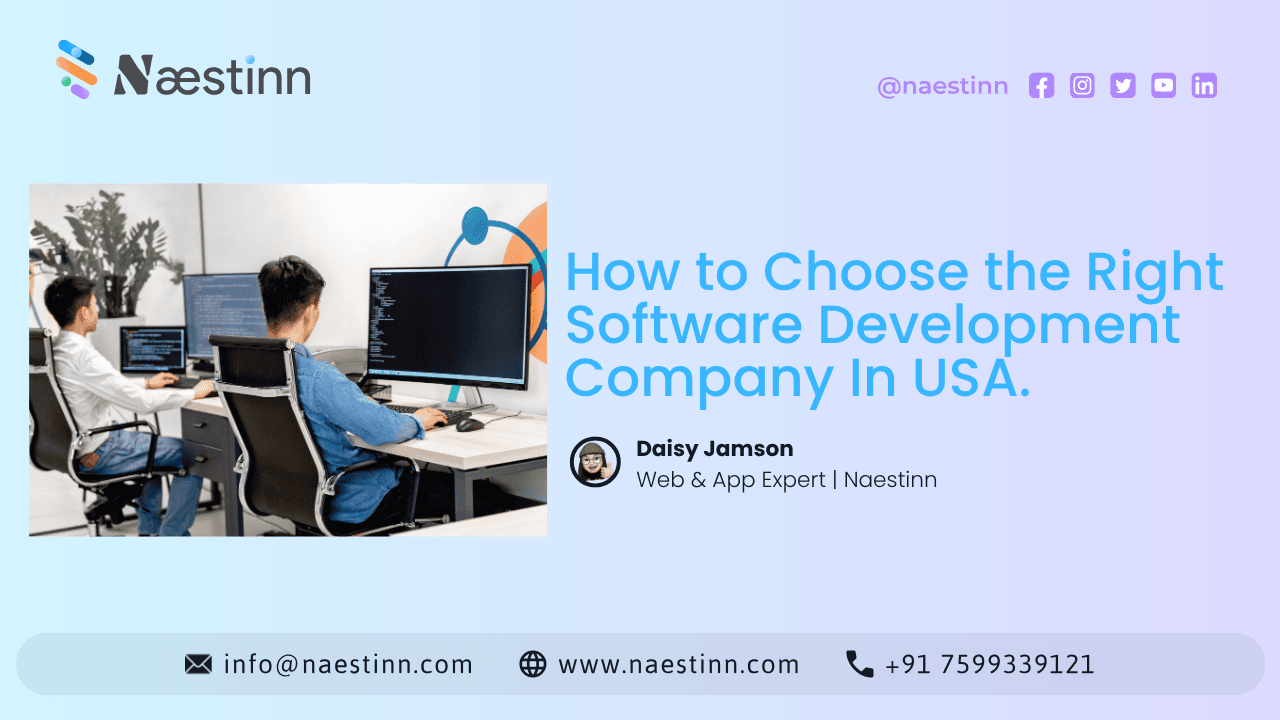
Choosing a software development company is more than finding a team that can write code.
Businesses need a technology partner that understands their business model, users, workflows, security requirements and long-term goals.
The U.S. market has thousands of software development providers, ranging from specialized development studios to large technology consultancies. Current industry directories show thousands of firms offering software development services across the country.
For businesses looking for a development partner, the real question is:
How do you choose the right software development company for your project?
What Can a Software Development Company Build?
Depending on your requirements, a development company can help build:
-
Custom business software
-
Web applications
-
Mobile applications
-
SaaS platforms
-
Customer portals
-
Enterprise applications
-
CRM and ERP solutions
-
AI-powered applications
-
Business automation systems
-
API integrations
Custom software is particularly useful when an off-the-shelf product cannot properly support a company's unique workflows or requirements.
7 Things to Check Before Hiring a Software Development Company in the USA
1. Understand Their Technical Expertise
Check whether the company has experience with the technologies your project requires.
This could include:
-
React
-
Node.js
-
Python
-
.NET
-
Java
-
Flutter
-
React Native
-
Cloud platforms
-
AI/ML
Don't choose a company simply because it lists a large number of technologies. Look for relevant project experience.
2. Check Their Industry Experience
A healthcare application will have very different requirements from a manufacturing platform or fintech product.
Ask whether the company has worked with businesses similar to yours.
3. Review Their Previous Projects
Look beyond attractive website designs.
Check:
-
What they built
-
The business problem they solved
-
Technologies used
-
Project complexity
-
Client results
Case studies can tell you much more than a list of services.
4. Ask About Their Development Process
A reliable project should have a clear process:
Discovery → UI/UX → Development → Testing → Deployment → Maintenance
You should know what happens at every stage and who is responsible for approvals and feedback.
5. Consider Scalability
Your software may start with 100 users but eventually need to support thousands.
Ask how the proposed architecture will handle:
-
More users
-
More data
-
New features
-
Third-party integrations
-
Increased traffic
6. Don't Ignore Security
Security should be considered from the beginning—not after development is complete.
Ask about:
-
Authentication
-
Authorization
-
Data encryption
-
API security
-
Secure coding
-
Testing
-
Backup and recovery
This becomes especially important for applications handling financial, customer or business-critical information.
7. Understand the Total Cost
Don't compare companies only by hourly rates.
Consider:
Development + UI/UX + Testing + Cloud + Integrations + Maintenance + Support
A cheaper initial quote can become expensive if important requirements are excluded.
When Should You Choose Custom Software?
Custom software can make sense when:
-
Existing software doesn't fit your workflow
-
You need unique features
-
Multiple systems need integration
-
You want complete control over the product
-
Your business needs a scalable platform
-
You want to build a SaaS product
If your requirements can easily be handled by an existing product, however, customization may not always be necessary.
Software Development vs Off-the-Shelf Software
|
Custom Software |
Off-the-Shelf Software |
|
Built around your requirements |
Built for a broader market |
|
Highly customizable |
Limited customization |
|
Can integrate with existing systems |
Integrations depend on available options |
|
Higher initial development effort |
Faster to deploy |
|
Greater control over features |
Features are predetermined |
|
Can scale with specific business needs |
Scaling depends on the provider |
The right choice depends on your budget, business processes, timeline and technical requirements.
Why Businesses Need a Technology Partner, Not Just Developers
A good software development partner should contribute beyond coding.
They should help you answer:
-
What should we build first?
-
Which features are actually necessary?
-
What should the user experience look like?
-
How should the application integrate with existing systems?
-
How can we keep the product scalable?
-
What should be automated using AI?
This approach can prevent businesses from spending money on features that don't solve real problems.
Conclusion
Finding the right software development company in the USA requires more than comparing prices.
Look for a partner with relevant technical expertise, industry experience, strong communication, a clear development process, security awareness and long-term support capabilities.
Whether you need a custom web application, mobile app, SaaS product, AI solution or business automation platform, the right development partner should understand why you're building the product—not just how to build it.
Looking for a Software Development Partner?
Naestinn helps businesses build custom software, web applications, mobile apps, AI solutions and business automation systems based on their specific requirements.
From product discovery and UI/UX to development, integration, testing and ongoing support, Naestinn can work as a technology partner for businesses looking to build or modernize digital products.
Talk to Naestinn about your software development requirements.
Frequently Asked Questions
How do I choose a software development company in the USA?
How much does custom software development cost in the USA?
Should I hire a US-based software development company?
Can a software development company build an AI-powered application?
How long does custom software development take?
Table of Contents
Top Stories


Turn your vision into
scalable reality.
Stop guessing with AI-generated scopes. Get reliable architecture, expert engineering, and a product that scales.